Hi, I'm Shijin Duan

Senior Research Engineer at 2012 Labs
Huawei @ Beijing, China

I am a senior research engineer at 2012 Labs, Huawei. I received my Ph.D. in Computer Engineering from Northeastern University, where I was advised by Prof. Xiaolin Xu. My focus is on AI infrastructure and OS-side optimization, making AI inference services swift, secure, and scalable.
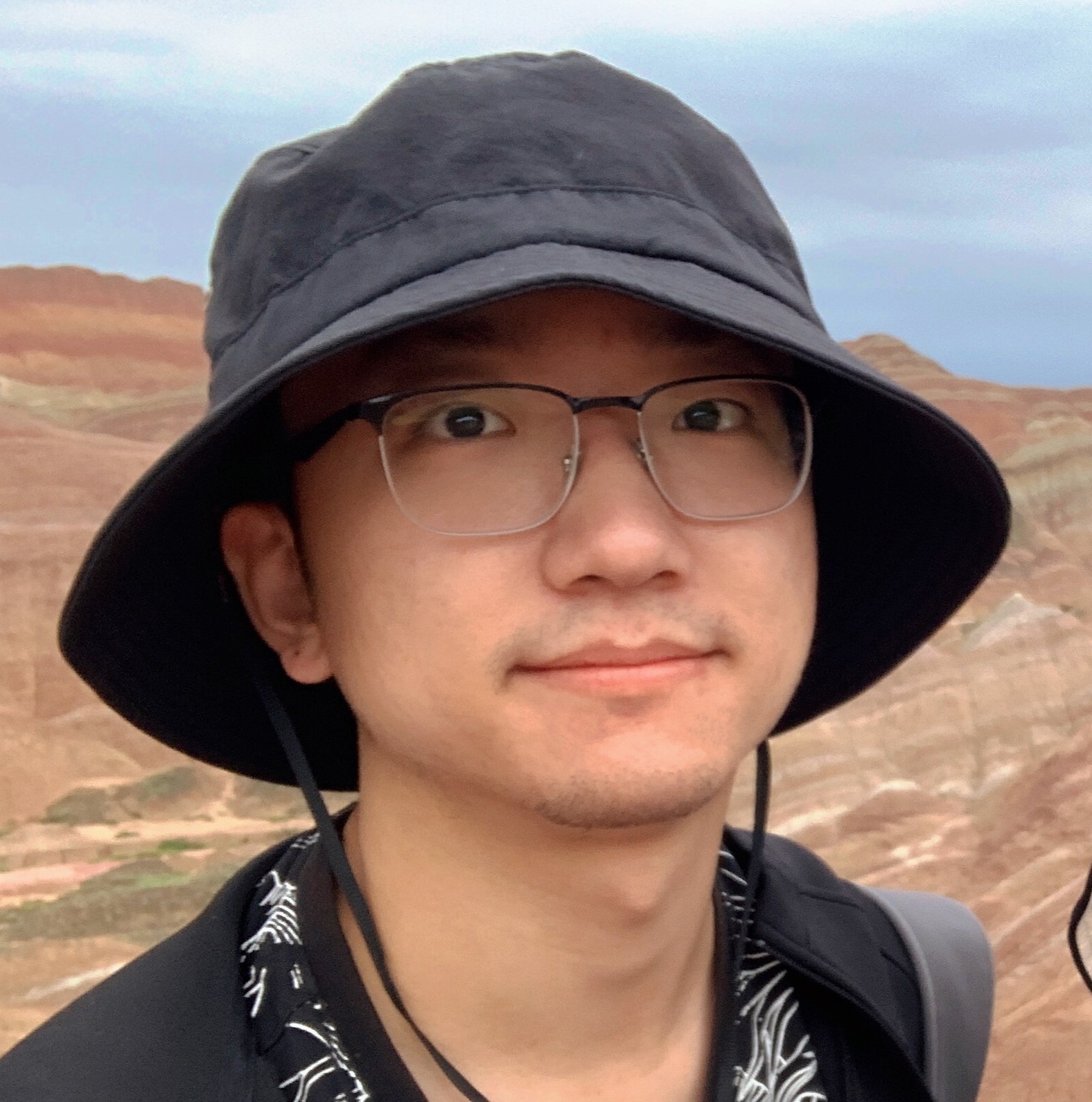
Shijin Duan

桃李不言,下自成蹊

Working On

Memory Management on AI Inference Services PyPTO AI Infrastructure

Experience

Recent roles and research directions.

2025.08 - Now

SRE

Huawei

AI Infrastructure and Memory Management on AI-native-OS.

2020.09 - 2025.05

Research Assistant

Northeastern University

Research on diverse areas, including Vector Symbolic Architectures, Quantum ML, Graph ML, Multi-Party Computation, Hardware Security.

Highlighted Research

Representative projects and selected publications.

Ultra-Lightweight Binary Vector Symbolic Architecture

Advanced Binary VSA in machine learning by integrating partial binary neural networks into VSA training. Drastically reduces the vector dimensions required by approximately 99% while maintaining comparable accuracy. Models are only several kilobytes! Prototypes accelerated on FPGA and MCU. Fostered one patent and an NSF award.

[DAC'25] Holistic Design towards Resource-Stringent Binary Vector Symbolic Architecture.
[CPAL'25] Towards Vector Optimization on Low-Dimensional Vector Symbolic Architecture.
[ASPLOS'24] MicroVSA: An Ultra-Lightweight VSA-based Classifier Library for Tiny Microcontrollers.
[DAC'22] LeHDC: Learning-Based Hyperdimensional Computing Classifier.
[DAC'22] HDLock: Exploiting Privileged Encoding to Protect Hyperdimensional Computing Models against IP Stealing.
[tinyML'22] A Brain-Inspired Low-Dimensional Computing Classifier for Inference on Tiny Devices.
[NANOARCH'21] HDCOG: A Lightweight Hyperdimensional Computing Framework with Feature Extraction.

Quantum Machine Learning

Studies robust training for quantum neural networks in the noisy intermediate-scale quantum era. Introduces a noise-aware training strategy that adapts to both standard and fatal error conditions, with a low-complexity search method to identify critical failures during optimization. This approach substantially improves robustness while maintaining competitive performance across diverse error scenarios.

[DAC'25] Towards Training Robustness Against Dynamic Errors in Quantum Machine Learning.

Graph Structure Representation with Cross-Correlation Autoencoder

Focuses on graph structural reconstruction with graph autoencoders (GAEs). Introduced a cross-correlation mechanism to enhance GAE representational capabilities addressing limitations in self-correlation models. Proposed GraphCroc, a U-Net-like GAE that ensures robust structural reconstruction through a mirrored encoding-decoding process.

[NeurIPS'24] GraphCroc: Cross-Correlation Autoencoder for Graph Structural Reconstruction.

Secure Multi-Party Computation for Deep Learning

Advances privacy-preserving machine learning through multi-party computation (MPC). Addresses latency issues in MPC with acceleration methods, including FPGA integration and ReLU approximation. Proposed accelerations on FPGA achieved 25% reduced communication and 26x improved energy efficiency compared to existing frameworks.

[MICRO'23] AQ2PNN: Enabling Two-party Privacy-Preserving DNN Inference with Adaptive Quantization.
[ArXiv'24] SSNet: A Lightweight Multi-Party Computation Scheme for Practical Privacy-Preserving Machine Learning Service in the Cloud.
[DAC'23] PASNet: Polynomial Architecture Search Framework for Two-party Computation-based Secure NN Deployment.

Defense against Crosstalk-Based Side-Channel Attack in FPGA

Proposed a defense framework leveraging placement, routing, and obfuscation to mitigate secret leakage on FPGA components through crosstalk side channels. Reduces leakage by 138 times with minimal latency and area overhead. Won the ACM TODAES Rookie Author of the Year (RAY) Award.

RAY Award [TODAES'21] FPGAPRO: A Defense Framework Against Crosstalk-Induced Secret Leakage in FPGA.

Other Publications

Professional Service

Invited Paper Review

NeurIPS(2026-2025), ICML(2026), CVPR(2026), TDSC(2026), PeerJ(2025), JAIR(2024-2025), TIFS(2024), PEVA(2024), TCE(2024), TETC(2023), IEEE-SJ(2021-2023), DAC(2023), HOST(2023), Integration(2022), TOMPECS(2021)

Invited Talks

  • Vector Symbolic Architecture as an Efficient Solution for Classification Tasks. @UMassD (March 2024)
  • Practical Topics for Embedding Machine Learning on Quantum Platforms. @UMassD (December 2024)

Teaching Assistance

  • EECE 2322 / 2323

    Fundamentals of Digital Design and Computer Organization

    Spring 2022, Fall 2020, Fall 2022

  • EECE 2160

    Embedded Design: Enabling Robotics

    Spring 2021